What We Offer: Kitchen Knife Sets, Steel and Care
We cover the questions that come up before anyone spends money on kitchen knives: which set fits the cooking, what the steel and handle change, how to keep the edge, and where a knife makes a visible difference in the food.
What this site covers and where it stops
We look at five questions that come up before anyone buys kitchen knives. Which set suits the way a kitchen cooks, what the blade steel and the handle change over years of use, how to wash and store the knives, how steak knives should be laid and used, and where a particular knife changes the result in a recipe. Most of them have a page of their own, and this one is the map.
Three kinds of blade steel come up again and again: plain stainless, layered Damascus and high-carbon steel. Each trades edge retention, ease of care and cost against the others, and no single kind is right for every kitchen. We compare them by how they behave at the board and in the dishwasher, because those are things a cook can observe for themselves before buying.
A set is also a decision about count. A household that cooks for two needs a different number of pieces than a café kitchen that prepares lunch for a full room, and a kitchen that never sees the dishwasher carries a different care load from one that does. The count therefore depends on the kitchen, and the set helper on the ingredients page asks how many people eat and how the knives are washed before it names a number.
Where this site stops matters as much. We do not rank brands, quote prices or claim to have tested any maker's knives. We read what makers publish, and we set those statements against the steel and handle facts.
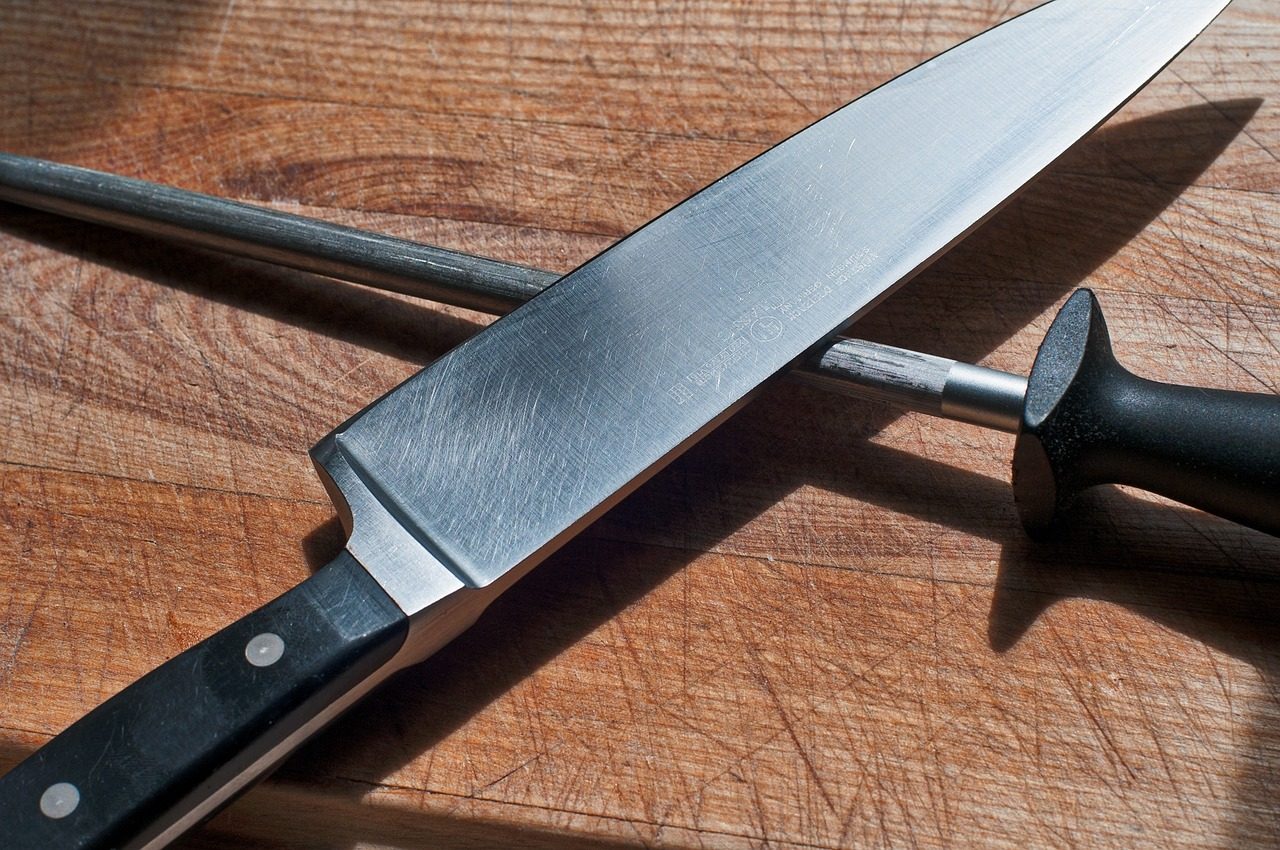
The short list a reader comes back to look up
Three steels come up most often, plain stainless, layered Damascus and high-carbon, and the first question to settle is how the knives will be washed, since that does more to decide which steel suits a kitchen than any other fact. A chef knife does most of the cutting in a kitchen, so it is the piece worth the most care in choosing. The steak knives that come with a set matter most at the table, where weight and balance are felt on every cut.
Watching a matched Damascus set come together
Making a matched set is slow work, and the film below shows the stages in order, from the forged billet to the finished blade. It is worth watching before buying, because layered steel is hard to judge from a shop shelf and easier to understand once the pattern is seen forming.
A workshop film of a Damascus chef knife set being made, published on YouTube by JP's Bladeworks and embedded here with its official player.
What this guide covers, counted
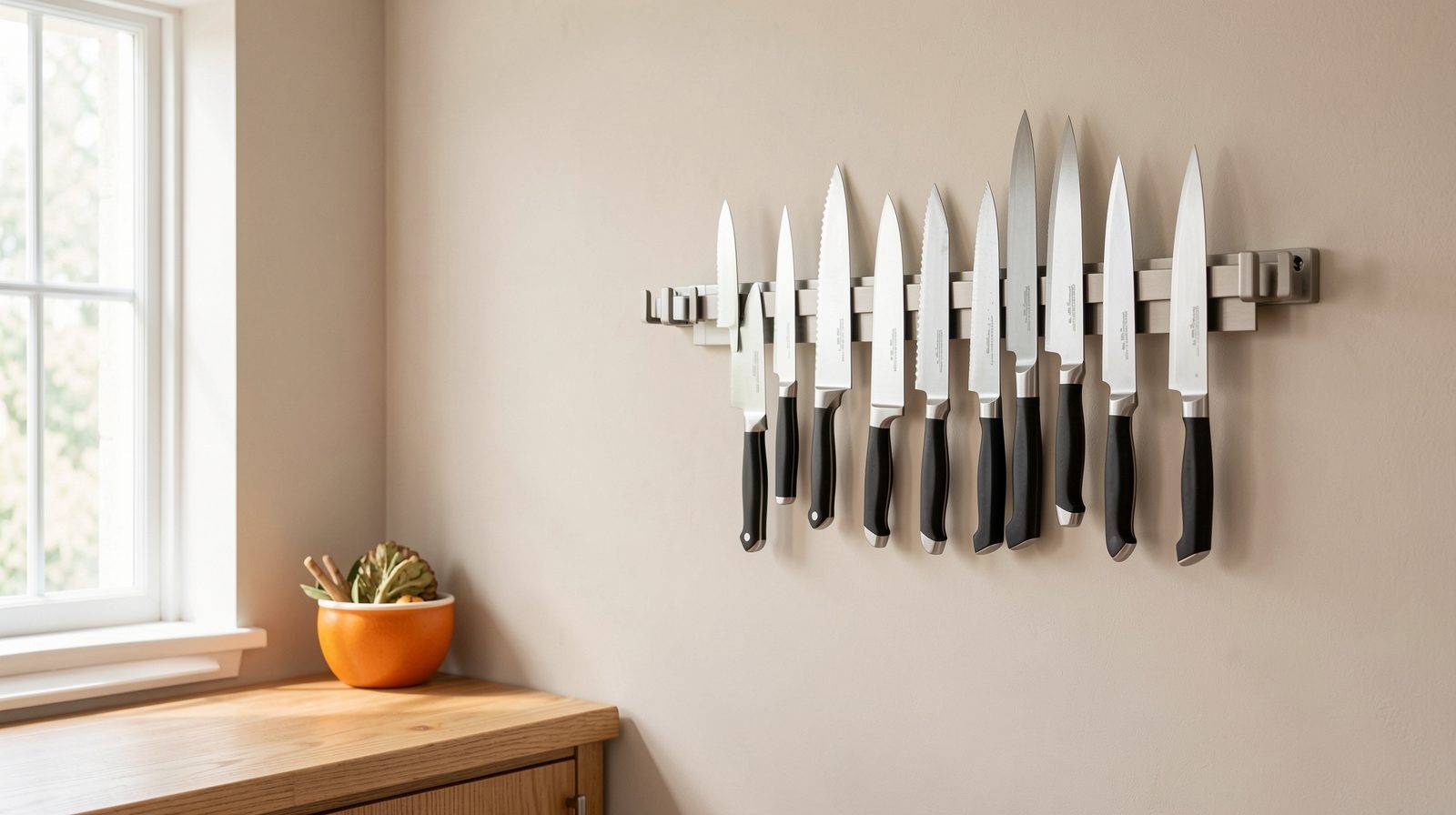
Where to go next once the questions are answered
The set helper on the ingredients page asks a few questions about how you cook and wash up, then names a set and a steel with the reasons printed beneath. If you already know those answers, the storage and serving page sets out how to keep a set working once it is back in the drawer.